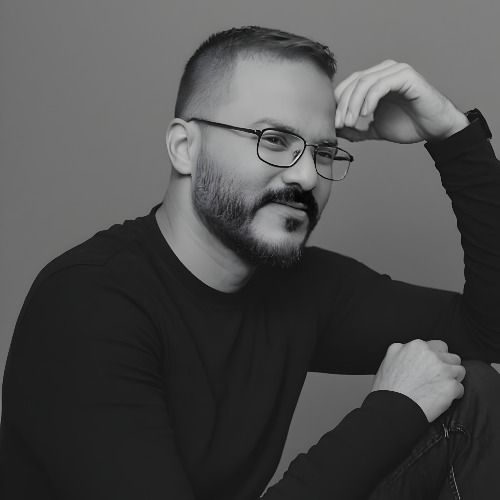
Episode 23
Facing the Shadows: Healing Beyond Survival With Adriene
This episode delves into the profound notion that some narratives transcend the simplicity of survival; they encompass the arduous journey toward self-discovery and resilience. We engage in a compelling dialogue with Adrian Caldwell, whose life experiences illuminate the complexities of trauma, endurance, and the eventual emergence of hope. Through candid reflections, Adrian articulates the challenges of transforming from mere survival into a state characterized by choice and agency. The conversation navigates the intricacies of personal history, mental health, and the systemic failures that perpetuate suffering, offering listeners a poignant exploration of healing. Ultimately, we aim to convey that the path from trauma does not necessitate the erasure of the past, but rather an embrace of one's power to define their future.
This episode navigates the complexities of trauma and resilience through the lens of Adrian Caldwell’s lived experiences. Caldwell recounts a series of traumatic events that include emotional and physical abuse, addiction, and the failures of the foster care system, which she argues often exacerbates the suffering of vulnerable children. Through her heartfelt narrative, she uncovers the critical distinction between merely surviving trauma and the arduous journey toward thriving. Caldwell emphasizes that survival is often characterized by a necessity to endure, rather than a reflection of inner strength, thereby challenging the prevailing narratives that glorify resilience without acknowledging the pain that accompanies it. The discussion further delves into the systemic issues surrounding mental health and child welfare, as Caldwell shares her observations of how societal neglect contributes to the perpetuation of trauma. She speaks candidly about the emotional scars left by her experiences and the importance of addressing these wounds with compassion and understanding. The conversation provides a platform for exploring the often-overlooked aspects of recovery, including the necessity for acknowledgment and validation of one’s pain as a crucial step toward healing. As the dialogue progresses, Caldwell offers insights into the transformative power of choice and agency in the healing process. She encourages listeners to embrace their own narratives and recognize that their past does not dictate their future. This message of empowerment resonates deeply, as Caldwell shares her journey toward self-acceptance and the realization that healing is not a linear path but rather a multifaceted journey filled with both setbacks and triumphs. The episode concludes on a hopeful note, urging all who are struggling to understand that they possess the strength to alter their life’s trajectory, ultimately fostering a sense of agency amidst adversity.
Takeaways:
- Survival is often misunderstood, as it entails a complex journey beyond mere endurance.
- The concept of strength following trauma neglects the myriad of coping mechanisms involved.
- Emotional and psychological abuses can be far more damaging than physical trauma, as evidenced in foster care experiences.
- Healing requires confronting past traumas, which can be a cathartic yet difficult process.
- Decisions made in the present greatly influence one's future, highlighting the importance of self-agency.
- The journey from survival to thriving involves recognizing one's power and making intentional choices for healing.
Links referenced in this episode:
Companies mentioned in this episode:
- Unbroken Caldwell
------------------------------------------------------------------------------------
🎙️ Want to Be a Guest on Healthy Mind, Healthy Life?
Send me a direct message on PodMatch.
👉 DM Me Here: https://www.podmatch.com/hostdetailpreview/avik
🌱 About Healthy Mind By Avik™️
Healthy Mind By Avik™️ Global Mental Wellness Podcast Network - focused, credible, no more identity clutter.
👉 Subscribe and be part of this healing journey.
Refer a Guest
Know someone who would be a great fit for one of our podcast shows? Email us at services@podhealth.club with the subject line “Refer a Guest.” Requests without this subject line cannot be catered to.
Support Our Podcast: Support this Podcast
📬 Contact & Links
Brand: Healthy Mind By Avik™️
Based in: India & USA
📌 Disclaimer - This episode is produced for educational and informational purposes only. All views expressed by the guest are their personal opinions alone and do not represent the views of the host or Healthy Mind by Avik™. The Network does not verify, endorse, or assume responsibility for any guest statements. Nothing in this episode constitutes medical, legal, financial, or professional advice, please consult a qualified professional before making any decisions. Listeners are encouraged to engage critically and independently with all content do not consume blindly. Use this content as a starting point for your own reflection and research, not as a substitute for professional guidance. Third-party content is referenced under fair use for informational purposes only. Guest speakers are solely responsible for their own statements.
If you have concerns about any content, please contact us here
By listening, you acknowledge and accept this disclaimer in full. Read detailed disclaimer here.
Transcript
Some stories are not about being saved.
Speaker A:They are about staying alive along enough to discover that something inside you never broke.
Speaker A:And in a world that often looks away from quite suffering, what does it really mean to move from survival into something deeper, like into choice, agency and hope?
Speaker A:That's where today's conversation begins, dear listeners.
Speaker A:So, hey everyone, welcome back to powerful episode of Mind meets Machine where we explored the human inner world, like the memory, resilience, meaning, and how it shapes systems that we live inside.
Speaker A:And today I'm joined by a lovely guest.
Speaker A:Please welcome Adrian Caldwell.
Speaker A:So welcome to the show.
Speaker B:Hi, Avi.
Speaker B:Thank you very much for having me.
Speaker B:It's a privilege to be here.
Speaker A:Amazing.
Speaker B:Thank you.
Speaker B:I am Adrian Caldwell.
Speaker B:I have written a book, it's Unbroken Life Outside the Lines.
Speaker B:It's the story of my early childhood through early 20s.
Speaker B:And I want to cover, I want to go through a list of the traumas that I've endured.
Speaker B:It will help you understand what I've overcome, what I've.
Speaker B:What I've not just survived, but how I have thrived in this world.
Speaker B:So I have either witnessed or been the victim of the sexual assault of a young girl, the drowning, death of another girl, emotional and physical abuse, extreme poverty, mental illness, homelessness, horrifically abusive foster care, bulimia, drug and alcohol addiction, pedophilia death, suicide, and incest.
Speaker B:So I have been through the wringer.
Speaker B:I have really gone through some truly traumatic situations, and I've come out the other side now.
Speaker B:It wasn't easy and it didn't happen immediately.
Speaker B:It took me several years, it took me until I was 25 years old to really get my life together.
Speaker B:But I am now in a place where my.
Speaker B:My life is wonderful.
Speaker B:It's not perfect, nothing ever.
Speaker B:But I am no longer stuck in my past.
Speaker A:That's really amazing.
Speaker A:Thank you so much, Adrian, for sharing that.
Speaker A:And dear listeners, I mean, this is a conversation I'd say about hope without sugarcoating, resilience without denial, and what it looks like to truly thrive just after barely surviving.
Speaker A:So I'll not take much of your time.
Speaker A:Let's get started, Adrian.
Speaker A:Like before we get into the part of healing the hope, I want to start with Gentry.
Speaker A:Like, when you look back now, what word best describes who you had to become just to make it through your early life?
Speaker B:I would say that I had to become fierce.
Speaker B:Fierce is my word.
Speaker B:It describes how I got through and many times I was just barely surviving and sometimes I almost didn't.
Speaker B:Yeah, there were times where I almost didn't survive.
Speaker A:So like, okay, and if I have to talk about the misconception, like there's, there's a very popular narrative that surviving trauma automatically makes someone, quote unquote strong.
Speaker A:And for that I'm really curious, like what does that idea get wrong about the real experience of survival?
Speaker B:So that idea skips, it skips all of the steps in between where you have to start with your trauma and then go through all of the coping mechanisms and attempts at trying to normalize your life yourself.
Speaker B:A lot of times it involves self medication, drugs, alcohol, just trying to numb yourself down.
Speaker B:So the idea of going from trauma to healed misses a whole bunch of steps in between.
Speaker B:And when you get, get past, if you get past the self medicating, if, if you make it past the trying to numb yourself down, then you are faced with having to deal with your, your reality of your past.
Speaker B:You have to choose how you are going to view it.
Speaker B:Are you going to let it be something that defines you?
Speaker B:Is it going to be your entire Persona?
Speaker B:Are you going to allow yourself to be a victim or are you going to move forward?
Speaker B:Are you going to go past that and go into thriving and healing?
Speaker A:So, okay, I mean, obviously that distinction feels important.
Speaker A:Survival is not the strength, it's necessity.
Speaker A:And strength, when it comes later is something earned with tremendous cost.
Speaker A:Right.
Speaker A:So, yes, and here your story speaks powerfully about the systems, the family systems, foster care, mental health systems that didn't protect you.
Speaker A:So, yeah, yeah, I mean, so, so when you reflect on that, right, so what patterns do you see that allowed harm to continue unchecked?
Speaker B:So you, you nailed them.
Speaker B:You, you're absolutely right.
Speaker B:The family, the foster care and the mental health.
Speaker B:My family has passed down not just genetics, but dysfunction.
Speaker B:The elder people in my family don't believe in mental illness, despite the fact that my grandfather was schizophrenic, my mother was schizophrenic, and I have a cousin who is schizophrenic.
Speaker B:My family simply denies it.
Speaker B:So there is no recognition that there is no getting help.
Speaker B:So my family absolutely failed me.
Speaker B:They did not protect me from my mother.
Speaker B:They did not get her help.
Speaker B:I did end up going into foster care.
Speaker B:And I will tell you that the abuse that I endured in foster care, it wasn't physical or sexual.
Speaker B:The abuse was emotional, psychological abuse.
Speaker B:It was worse than the abuse I suffered at the hands of my schizophrenic, physically abusive mother.
Speaker B:I have never had a nightmare about my mother.
Speaker B:I've had nightmares about my foster parent.
Speaker B:As recently as a Week ago, one week ago, I had another nightmare, and I usually wake up crying.
Speaker B:So anyone who says the emotional abuse isn't real, they're wrong.
Speaker B:They're absolutely wrong.
Speaker B:Because between the two, what I survived, foster care was far worse.
Speaker B:So foster care failed me egregiously.
Speaker B:And the system is inherently flawed.
Speaker B:There are not enough caseworkers, they are not paid well enough.
Speaker B:Caseworkers don't stay on the job because they're overloaded with kids.
Speaker B:They don't have the support.
Speaker B:There are so many things wrong with that system.
Speaker B:It doesn't help the kids.
Speaker B:When you turn 18, all of a sudden you're on your own.
Speaker B:And they're just now starting to implement programs to help with that transition.
Speaker B:But I didn't have anything.
Speaker B:When I turned 18, it was, see ya, goodbye, good luck.
Speaker B:So I've been failed by the social safety net and even cps, Children's Protective Services in particular.
Speaker B:I reported to my school counselor in sixth grade that my mother was abusing me.
Speaker B:And the caseworker came to our home and just decided that it was a mother daughter dispute.
Speaker B:Now, if she had spent any time researching, she would have found that there was a report filed on my mother from first grade.
Speaker B:So had she just looked, she would have seen that it established a pattern.
Speaker B:The sixth grade was the second time that CPS was being called in.
Speaker B:So it was absolutely a failure of the system.
Speaker B:And that was just one of the many ways it failed me.
Speaker A:I totally can understand for sure.
Speaker A:And I mean, what stands out is how silence, neglect, and untreated illness can become their own kind of violence, especially when a child has no way to name what's happening.
Speaker B:I knew when I was 5 years old that my mother was different.
Speaker B:I knew that there was something wrong with her.
Speaker B:I didn't know the word schizophrenia.
Speaker B:I didn't know the label for what was wrong with her.
Speaker B:But even as early as five years old, I knew that she was not right, that there was something wrong with her.
Speaker B:And as I mentioned earlier, my family just swept it under the rug.
Speaker B:Nobody talked about it.
Speaker B:So she relinquished her parental rights when I was 12 years old.
Speaker B:Ten years later, I did not see her again for 10 years.
Speaker B:And when I did see her again 10 years later, she had been living in a homeless shelter and she had been assigned a social worker.
Speaker B:And the social worker took my mother to a psychiatrist.
Speaker B:My mother got on medication.
Speaker B:They got her a government apartment with furniture, and she was doing so well.
Speaker B:It's like the system worked that time.
Speaker B:It worked and it was wonderful.
Speaker B:For me to have that experience, being able to see my mother happy and doing well, it was a blessing because she died a year later.
Speaker B:So I just.
Speaker B:I wished that What I saw 10 years later, I wished it could have happened when I was 12 years old.
Speaker B:I wish somebody would have assigned a caseworker to my mother and gotten her the help that she needed.
Speaker B:And if she had gotten that help early enough, there's a good chance that my brother and I would have been able to stay with her, that she would have been able to raise us had she gotten the help.
Speaker B:But she didn't.
Speaker B:And through no fault of her own, my family didn't intervene.
Speaker B:We were on.
Speaker B:We lived in a government apartment.
Speaker B:She was on welfare, she was on food stamps.
Speaker B:So there was definitely involvement from social services, but they never assigned her a case or they never got her any help.
Speaker A:And the trauma, it doesn't stay in the past.
Speaker A:It shows up in the body, in relationships, and in self belief as well.
Speaker A:So how did that survival mate follow.
Speaker A:Follow you into the adulthood before healing began to take place?
Speaker B:So my early 20s was riddled with dysfunction.
Speaker B:I was a drug addict.
Speaker B:I was addicted to cocaine.
Speaker B:It was only five months.
Speaker B:It was a short time frame, five months.
Speaker B:But I was absolutely addicted.
Speaker B:And I was able to get off of cocaine, but I became an alcoholic.
Speaker B:I replaced the.
Speaker B:The alcohol replaced the cocaine.
Speaker B:And I went from relationship to relationship.
Speaker B:Any man that could take care of me and, and pay, you know, pay for me, pay, keep a roof over my head, food on the table, I would just go from man to man, you know, like taking steps, you know, oh, this one's better than the last one.
Speaker B:I'm going to go to the next one.
Speaker B:So I spent the first five years in my 20s, 20 to 25, 20 to 24, really dysfunctional and making horrible decisions.
Speaker B:And I am truly, by the grace of God, I am here.
Speaker B:I was drugged one time in a bar.
Speaker B:Somebody put a date rape drug in my beer, and I was left naked in a parking lot, left for dead.
Speaker B:And when my.
Speaker B:My mom would later, my aunt would later tell me that when the paramedics arrived on scene, they couldn't find a pulse.
Speaker B:They thought I was dead at first.
Speaker B:So I've been so close to death many, many times, and I attempted suicide many times.
Speaker B:One time I woke up in the morning in a hospital bed and I. I looked around and my aunt.
Speaker B:My Aunt Rose filled in periodically throughout my childhood.
Speaker B:She.
Speaker B:She became.
Speaker B:I like to say that God didn't give me a mother and a father.
Speaker B:He gave me two mothers, so.
Speaker B:So my Aunt Rose is like my second mother, and she was standing in the doorway, and I asked her what happened.
Speaker B:Like, I didn't understand why I was in a hospital bed.
Speaker B:And she said, adrienne, you tried to kill yourself last night.
Speaker B:You took a bottle of pills.
Speaker B:They had to pump your stomach.
Speaker B:And I denied it.
Speaker B:I told her that I didn't do it.
Speaker B:And I denied it vehemently because I had no recollection of doing it.
Speaker B:I was blackout drunk, and that's how much pain I was in, that I was hurting so badly that even my subconscious self, not just my conscious self, but the subconscious self, even wanted to die.
Speaker B:And I didn't even believe the hospital about taking the bottle of pills.
Speaker B:I didn't believe the toxicology report.
Speaker B:I didn't believe it until I got in my car and I saw where I had regurgitated the pills, some of the pills I saw in my car, the residue.
Speaker B:And that's when I realized, oh, my God, I really did try to kill myself in a blackout drunk state.
Speaker B:So when I say, I don't know how many times I tried to kill myself, I mean it literally.
Speaker B:I don't know.
Speaker B:So my journey to healing has been decades long.
Speaker B:And what has been probably the most helpful, also one of the most difficult parts, but most helpful, was writing my book, Life Outside the Lines, because it forced me to revisit each trauma.
Speaker B:That list of traumas that I went through at the beginning of our episode, it forced me to face each one and to relive it.
Speaker B:And the brain can't tell the difference between it's happening right now in the moment versus it happened 20 years ago.
Speaker B:The brain doesn't differentiate.
Speaker B:So writing my book has actually taken me five years.
Speaker B:And it's been incredibly difficult, but it's been so cathartic because it forced me to face the issues that I had buried down, that I had repressed, that I had just pushed away.
Speaker B:It forced me to confront them.
Speaker B:So I've.
Speaker B:I've come even further than where I was before I started writing.
Speaker A:Agree.
Speaker A:Totally, totally agree.
Speaker A:Oh, and that constant vigilance, I mean, always scanning for the danger, makes so much sense when safety was never guaranteed.
Speaker A:And I would say that your work emphasizes hope, but not in a kind of rainbows and sunshine way.
Speaker A:So what helped you begin shifting from endurance into intentional healing, especially when life still felt.
Speaker B:My daughter changed my life.
Speaker B:I had her when I was 25.
Speaker A:Okay.
Speaker B:At first, I didn't think that I could raise her.
Speaker B:And one of my psychiatric evaluations and, and I've made my CPS case records, my psychiatric evaluations, my CPS caseworkers.
Speaker B:All those notes are available online at Unbroken Caldwell.
Speaker B:You can actually go to my website and see all of those documents.
Speaker B:I've made them public.
Speaker B:But having my daughter forced me to get my act together.
Speaker B:To be sober, to become self sufficient, to.
Speaker B:To gain a profession, have a career, really to grow up.
Speaker B:To grow up and to stop wallowing in my past, to stop letting it define me.
Speaker B:I was so trapped in my past that I couldn't see a way forward.
Speaker B:And having my daughter forced me to take steps forward.
Speaker B:You can't stay in bed all day when you have a toddler running around.
Speaker B:You have to take care of your child.
Speaker B:And I mentioned my records being online because in one of my psychiatric evaluations it says Adrienne is terrified of having children because she is afraid that she is going to do to that child what was done to her.
Speaker B:So even at 13, 14 years old, I was terrified of having children because of the trauma I had endured with my mother.
Speaker B:So it really was my daughter and I don't know what I would have done without her.
Speaker B:Having her, I feel like God put her in my life so that I would get my act together, so that I would grow up and really move forward.
Speaker A:I hear a deep honesty here and hope not as a denial of pain, but as a quite refusal to let the pain have the final word.
Speaker A:Right.
Speaker A:So yeah, and for the listeners who are still in the survival mode, who cannot yet imagine thriving, what would you want them to know about the future?
Speaker A:Even if they cannot feel it yet?
Speaker B:I want to tell them that what they're going through now does not have to last forever.
Speaker B:And that they have more power and more control than they realize.
Speaker B:That the decisions that they're making on a daily basis, if they're self medicating, if they're doing drugs, if they're drinking, if they're numbing themselves, that's the decisions you make today, decide the life that you're going to have tomorrow.
Speaker B:So if you're making those decisions, you're going to stay on that path.
Speaker B:But you have the power, you have the control to make different decisions and to bring yourself to a different place through your decisions, through your own power.
Speaker B:And I would really want them to, to embrace that power and that strength that they have.
Speaker B:They've gone through the difficult things, now it's time to heal.
Speaker B:That's what I would say.
Speaker A:Got it.
Speaker A:Got it.
Speaker A:And obviously thriving after trauma does not mean that the past disappears, but it means the past no longer decides who you are allowed to become.
Speaker A:So that is very relevant.
Speaker A:And Iran, like, for the listeners who feel connected to your story and want to explore your writing or advocacy, where's the past?
Speaker A:Or maybe where's the best place for them to find you?
Speaker B:Well, the best would be with my book, Unbroken Life Outside the Lines.
Speaker B:It comes out March and I am on Facebook, Insta and LinkedIn @Unbroken Caldwell.
Speaker B:And that's also my website, Unbroken Caldwell.com and in addition to those documents that I mentioned, there are photographs, there's an interview with a family member.
Speaker B:Really just a tremendous resource for, for anyone who's.
Speaker B:There's even a blog.
Speaker B:So anyone looking to connect with me.
Speaker B:And on my website, if you subscribe, you'll get the prologue in chapter one emailed to you.
Speaker B:And I don't spam people.
Speaker B:I just send the prologue in chapter one and then later on I send the announcement that the book is out on March 17th.
Speaker B:So those are the best ways to reach me.
Speaker B:And anyone who does reach out to me, I will respond.
Speaker B:I absolutely.
Speaker B:And it will be me.
Speaker B:It won't be my social media manager.
Speaker B:I will personally respond.
Speaker A:That's really great.
Speaker A:So, dear listeners, what I love to say is like, I'll put all the links and the details into the show notes.
Speaker A:Please reach out to her and yeah, you will.
Speaker A:You will learn from her experience.
Speaker A:Definitely.
Speaker A:And talk about her book.
Speaker A:Check about her social media.
Speaker A:So I'll put everything there.
Speaker A:And thank you so much for joining on Mind Meets Machine.
Speaker A:If today's conversation starts something tender or heavy, I encourage all of you to move gently and seek support where you need it.
Speaker A:Because healing does not ask you to be brave every day, but it only asks you to keep choosing life.
Speaker A:So until next time, this is your host, Avik.
Speaker A:And this is Mind Meets Machine.
Speaker A:Take care of your mind, your story and your becoming.
Speaker A:Thank you so much.